
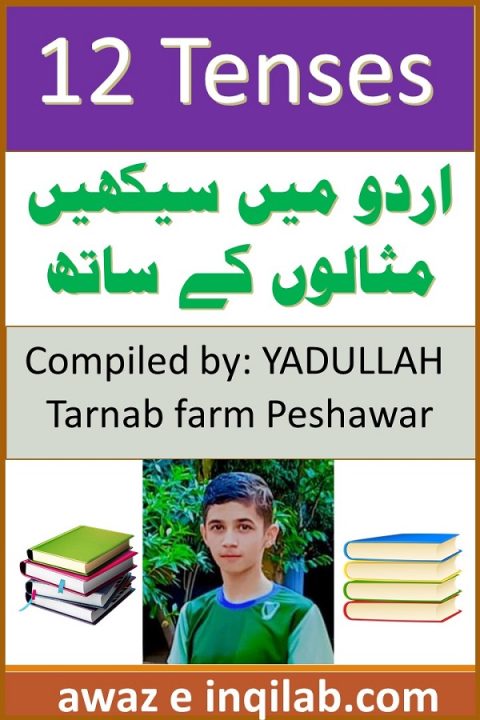
Download English Tenses in Urdu by Yadullah PDF. Learn all tenses with Urdu definitions
Book Name: English Tenses in Urdu
Author: Yadullah
Publisher: Awaz e Inqilab
Language: Urdu
Format: PDF
Category: English Grammar / Urdu Learning Book
Introduction:
English Tenses in Urdu by Yadullah is one of the best Urdu grammar guides for learning all English tenses in a simple and easy-to-understand manner. It’s an ideal book for students, teachers, and beginners who want to improve their English speaking and writing skills through Urdu explanations.
This book covers all twelve tenses in detail, including definitions, structures, and examples of positive, negative, interrogative, and interrogative + negative sentences.
Topics Covered in This Book:
1. Present Tense
• Present Indefinite Tense:
Definition and structure with examples like:
“He plays cricket” (وہ کرکٹ کھیلتا ہے)
• Present Continuous Tense:
Usage of “is, am, are” with Urdu translation.
Example: “He is playing cricket” (وہ کرکٹ کھیل رہا ہے)
• Present Perfect Tense:
Use of “has, have” with past participle.
Example: “He has played cricket” (وہ کرکٹ کھیل چکا ہے)
• Present Perfect Continuous Tense:
Use of “has been, have been” with time expression.
Example: “He has been playing cricket for two hours” (وہ دو گھنٹے سے کرکٹ کھیل رہا ہے)
2. Past Tense
• Past Indefinite Tense:
Use of 2nd form of verb.
Example: “He played cricket” (اس نے کرکٹ کھیلا)
• Past Continuous Tense:
Use of “was, were” for ongoing past actions.
Example: “He was playing cricket” (وہ کرکٹ کھیل رہا تھا)
• Past Perfect Tense:
Use of “had” with past participle.
Example: “He had played cricket” (وہ کرکٹ کھیل چکا تھا)
• Past Perfect Continuous Tense:
Use of “had been” + ing form.
Example: “He had been playing cricket since morning” (وہ صبح سے کرکٹ کھیل رہا تھا)
3. Future Tense
• Future Indefinite Tense:
Use of “will/shall” for future actions.
Example: “He will play cricket” (وہ کرکٹ کھیلے گا)
• Future Continuous Tense:
Use of “will be/shall be.”
Example: “He will be playing cricket” (وہ کرکٹ کھیل رہا ہوگا)
• Future Perfect Tense:
Use of “will have/shall have.”
Example: “He will have played cricket” (وہ کرکٹ کھیل چکا ہوگا)
• Future Perfect Continuous Tense:
Use of “will have been/shall have been.”
Example: “He will have been playing cricket for an hour” (وہ ایک گھنٹے سے کرکٹ کھیل رہا ہوگا)
Special Features of the Book:
✔ Urdu definitions and explanations for every tense
✔ Examples of positive, negative, interrogative, and interrogative + negative sentences
✔ Step-by-step grammar rules
✔ Easy for beginners and Urdu medium students
✔ Helpful for teachers, tutors, and competitive exam aspirants
✔ Clear translation and structure charts for each tense
Benefits of Reading This Book:
1. Improves English grammar understanding for Urdu speakers
2. Helps in sentence making and translation exercises
3. Builds confidence in English speaking and writing
4. Ideal for school and college students
5. Supports teachers in explaining tenses effectively
6. Useful for test preparation like CSS, PMS, and NTS